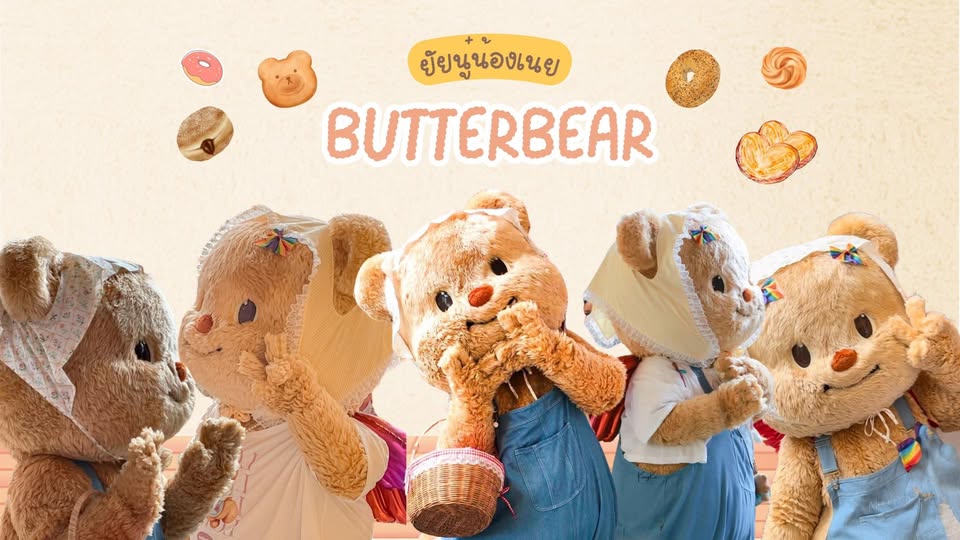
If you’ve walked through a Bangkok mall recently and seen a crowd of screaming fans that rivaled a K-Pop concert, you weren’t witnessing a movie premiere. You were likely witnessing the “Butterbear” phenomenon.
What started “Nong Mee Noey”, as a mascot for a humble bakery (Butterbear at Emsphere), has exploded into a multi-million baht tourism engine.
Here at Thailand Secret, we’re diving into how this “Mascot Magic” is quietly redefining how the world sees—and visits—the Land of Smiles.
From Bakery to Global Icon
“Nong Noey” (Butterbear) didn’t just happen by accident. While her viral TikTok dances—executed with surprisingly fluid human-like precision—captured the internet’s heart, her rise marks a shift in Thailand’s “Soft Power” strategy.
Gone are the days when tourism was only about temple tours and Pad Thai. Today, it’s about emotional connection.
Butterbear has become the face of a new, “cute” Thailand that appeals to Gen Z and Alpha travelers from China, Korea, and Japan.
The TAT’s Secret Weapon
The Tourism Authority of Thailand (TAT) was quick to spot the trend. Recognizing that Butterbear has a “fandom” rather than just a “customer base,” they launched the “Instant Happiness with Butterbear” campaign.
The strategy is brilliant: follow the bear. By documenting Butterbear’s “travels” to iconic Bangkok landmarks and nearby provinces, the TAT is effectively creating a new digital map for tourists.
International fans aren’t just coming to Thailand for the beach; they are coming for a “meet and greet” with a fuzzy brown bear, spending millions on hotels, food, and merchandise in the process.
The “Moo Deng” Effect: A Mascot Ecosystem
Butterbear isn’t alone. She is part of a wider “Mascot Magic” movement that includes:
-
Moo Deng: The chaotic baby pygmy hippo from Khao Kheow Open Zoo who became a global meme.
-
Eva the Tiger: The photogenic star of Chiang Mai Night Safari.
These “characters”—both costumed and biological—create a sense of urgency. You can’t just see them on a screen; you have to be there to feel the magic.
For the Thai economy, this translates to massive foot traffic in areas that might otherwise be overlooked by the average tourist.
Breaking Borders: Mount Fuji is Turning Pastel
In a historic move for a Thai brand, Butterbear has officially gone international. From January to July 2026, Butterbear has taken over Fuji-Q Highland in Japan.
This is the “secret” success story: a Thai mascot is now exported to Japan—the undisputed world champion of mascot culture (Yuru-chara). By setting up a “Sweet & Cute” fantasy world at the foot of Mount Fuji, Butterbear is proving that Thai creative exports can compete on the world stage, drawing Japanese tourists closer to Thai brands before they even book a flight to Bangkok.
What This Means for Your Next Trip
For those visiting Thailand, the “Butterbear effect” means more immersive, character-driven experiences. Whether it’s limited-edition pop-up cafes or “mascot-led” city tours, the line between retail and tourism has officially blurred.
The Insider Tip: if you want to catch a glimpse of the magic without the three-hour queue, keep an eye on the official social schedules. But be warned: in the world of Thai Mascot Magic, the bear is the boss.
Looking for more Thai travel secrets? Stay tuned to ThailandSecret.com for the latest on culture, trends, and the hidden gems of the Kingdom.
Follow Thailand Secret on X, Facebook, Instagram, Youtube, TikTok, WhatsApp, Telegram, Rumble.
Have any thoughts?
Share your reaction or leave a quick response — we’d love to hear what you think!
-
 0
-
 0
-
 0
-
 0
-
 0
-
 0