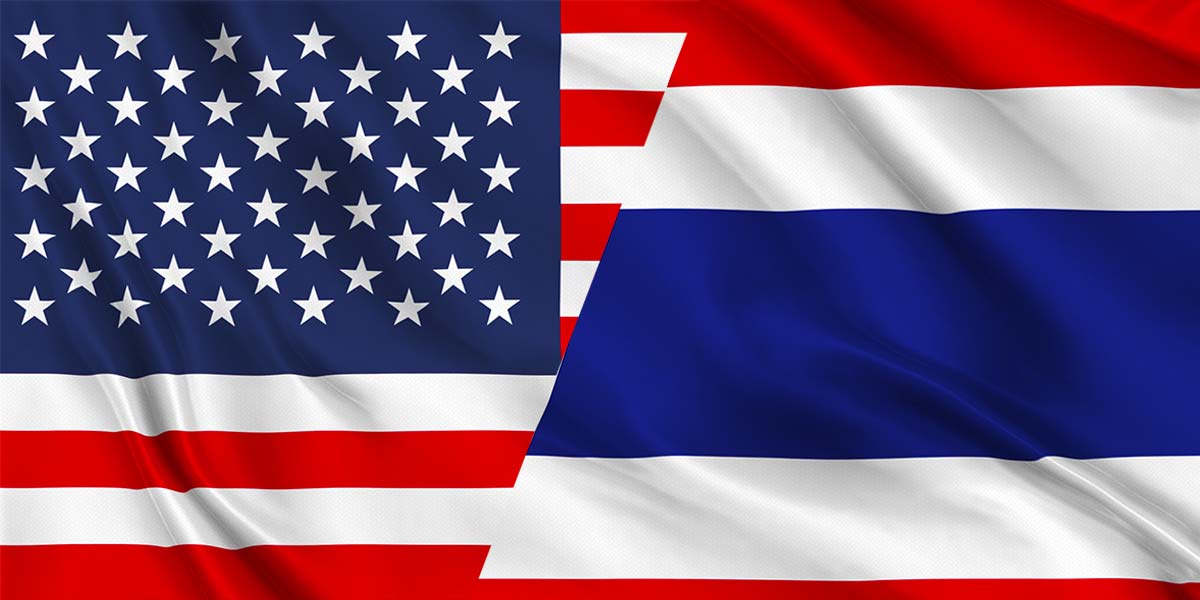
For most foreign investors setting foot in the Land of Smiles, launching a business comes with a major catch: the Foreign Business Act (FBA).
Under standard Thai corporate law, foreign nationals are restricted from owning more than 49% of a company, requiring them to find local Thai partners to hold the remaining 51% majority stake.
However, American citizens and U.S.-owned companies possess a unique economic superpower in Thailand. Thanks to a historic bilateral agreement, U.S. investors can legally set up and retain 100% sole ownership of their Thai business ventures.
Here is a breakdown of why this privilege exists, how it works, and what American entrepreneurs need to know before launching in Thailand.
Why Do Americans Get Special Business Rights in Thailand?
This commercial advantage stems from the Treaty of Amity and Economic Relations signed between the United States and Thailand. Originally forged in 1833 and updated in 1966, it is one of the oldest diplomatic trade treaties in U.S. history.
The cornerstone of the Amity Treaty is the concept of “National Treatment.” Under this principle, Thailand grants U.S. investors and businesses nearly the exact same commercial rights and legal standings as local Thai citizens.
In exchange for historical and strategic economic cooperation, American firms are exempt from the majority foreign ownership caps enforced against other nationalities under the Foreign Business Act.
The Core Advantages of a Treaty of Amity Company
-
Total Corporate Control (100% Equity): You do not need to seek local Thai shareholders to hold 51% of your company’s shares. You retain complete governance, board voting rights, and full profit distribution.
-
Exemption from the Foreign Business License (FBL): Standard foreign entities must endure a lengthy, unpredictable application process for a Foreign Business License to operate in service or commercial sectors. Amity Treaty companies bypass this barrier and are instead issued a Foreign Business Certificate by the Ministry of Commerce.
-
Streamlined Market Entry: Compared to complex equity arrangements or nominee structures, an Amity Treaty setup provides a straightforward, legally secure path for expansion into Southeast Asia.
Standard Foreign Setup vs. U.S. Amity Treaty Company
| Feature | Standard Foreign Company | U.S. Amity Treaty Company |
| Max Foreign Ownership | 49% (Majority Thai required) | 100% American Ownership |
| Operational Control | Shared with local partners | Sole Management Control |
| Regulatory Route | Foreign Business License (FBL) | Foreign Business Certificate (DBD) |
| Protection Against Local Risks | Partner default or dispute risks | Direct legal protection under international treaty |
Eligibility Criteria and Key Conditions
While the treaty opens doors, it comes with strict compliance checks to prove authentic American control:
-
Majority Ownership: At least 51% of the company’s shares must be owned by U.S. citizens or U.S.-incorporated entities. If a U.S. parent corporation owns the Thai entity, that parent company must also be majority-owned by Americans all the way up the corporate chain.
-
Board of Directors: The majority of managing directors must be either U.S. citizens or Thai nationals. Third-country nationals cannot make up the majority of the board.
-
Two-Step Registration: The business must first be certified by the U.S. Commercial Service at the U.S. Embassy in Bangkok, which verifies citizenship and corporate documents. Once certified, the application is submitted to the Department of Business Development (DBD) at the Thai Ministry of Commerce.
Important Exceptions: What the Amity Treaty DOES NOT Cover
Despite its extensive privileges, the Amity Treaty is not a catch-all solution.
Certain industries remain reserved strictly for local execution, including:
-
Land Ownership: The Amity Treaty does not allow foreign individuals or American companies to own land outright in Thailand.
-
Restricted Sectors: American firms cannot operate in inland transportation, domestic trade in indigenous agricultural products, communications, depository banking, or fiduciary functions.
-
Immigration & Work Permits: The treaty governs business ownership, not immigration rights. U.S. citizens still require standard Non-B visas, work permits, and must meet capital requirements for foreign staff.
For U.S. entrepreneurs, digital nomads, and established corporations looking to anchor their presence in Southeast Asia, the U.S.–Thailand Treaty of Amity remains one of the single most valuable business incentives in global commerce.
Support our work: Click Here
Best Travel Insurance: click here
Best VPN for Travel: click here
Have any thoughts?
Share your reaction or leave a quick response — we’d love to hear what you think!
-
 0
-
 0
-
 0
-
 0
-
 0
-
 0